
Founding Pioneers — Doors Open
Be one of the first to put a lifetime of skill back on the map.
Retired and Useful is a brand-new global register for the people who built the modern world — master artisans, heritage trades, industry veterans, lawyers, editors, engineers, executives. We've just opened the doors. The first people through them shape what this becomes: the disciplines we register, the way trust is earned, the tone of every page. If you've spent a lifetime learning something hard, claim your place as a Founding Pioneer.
Free to join. Free to list. No waiting list. Already a Pioneer? Sign in.
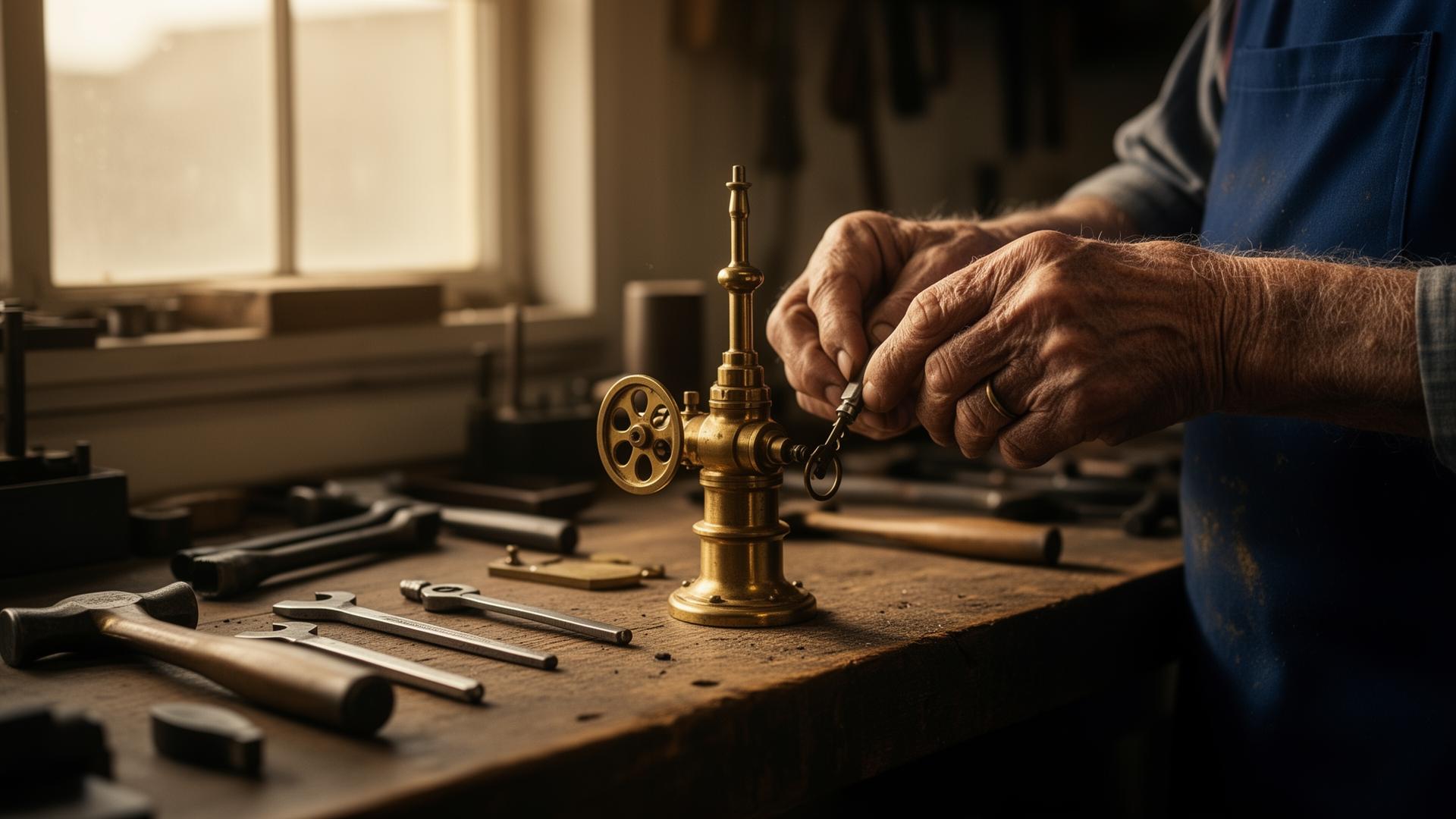
Share the wisdom only experience can teach.
Whether you mended steam engines, shaped policy, or kept a craft alive across decades — your knowledge is wanted. Join a register built to honour it.
Free to join. No obligations. You choose how much you share.
What gets lost when we don't ask in time.
Most of the skills that built the modern world were learned slowly — over apprenticeships, decades, household kitchens, regional guilds, family workshops. They were never written down because there was always someone to ask.
That isn't true any more. The people who hold these skills are mostly past sixty, and the platforms built for working life don't fit them. LinkedIn is for the job you just left. Guild registers are scattered. Word of mouth works inside small towns, and nowhere else. So restorers can't find the right hands, museums lose context, families lose recipes, and the next generation reinvents what someone already knows.
When skilled older people are listed in one respectful place — one they helped shape — that gap closes. Apprentices find masters. Museums find restorers. Founders find non-executive directors who've already seen the mistake coming. And the holders themselves get a clear, dignified way to say: I still know how, and I'm still willing to share it.
What Retired and Useful offers.
Four promises that shape every decision we make on the platform.
A craft you thought was gone — found in an afternoon.
One searchable register of people who still know how. Search by skill, region, language, and whether the holder offers help freely or for a fee.
Recognition for a lifetime of skill, on the holder's terms.
Mentors choose how much time they give, who they work with, and what they charge — if anything. No algorithm pressures them, no platform takes a cut of their work.
Verified people, not anonymous profiles.
Every register listing is checked by fellow retirees before it's published. Identity, references and skills are confirmed in tiers — so seekers know what they're looking at.
Free to list. Free to search. Paid only when both sides agree.
Retired and Useful never handles money between mentors and seekers. Fees, invoicing, tax — all arranged directly. Our subscription is paid by seekers, not by the people sharing what they know.
Who Retired and Useful is for.
If you hold hard-won experience
You might be a retired horologist, a lacemaker who learned from her grandmother, a steam engineer who kept the last working mill alive, a midwife with forty years of home births, a boatbuilder who still works in kauri or oak. You set your terms. You decide who you'll talk to and what you'll charge — if anything.
If you're looking for one
You might be a grandchild restoring an heirloom clock, a museum curator preparing an exhibition, a small workshop reviving a traditional process, a charity board recruiting a non-executive who's already done the job, or a young apprentice who simply can't find a teacher. You search, you contact directly, you take it from there.
Twenty-two disciplines, and growing.
The crafts, trades and professions we're registering first — chosen because they're genuinely hard to find help for. Heritage workshops sit alongside hard-won professional disciplines: law and patents, media, advertising, publishing, finance, public service, teaching and architecture. Don't see yours? Tell us — we'll add it.
Steam, mechanical & traditional engineering
Steam engines, blacksmithing, vintage machine tools
Horology & precision instruments
Clocks, watches, scientific instruments
Maritime & traditional boatbuilding
Wooden boats, sail-making, rigging
Heritage trades & crafts
Thatching, stonemasonry, leatherwork, joinery
Textiles, lacemaking & fibre arts
Weaving, lace, embroidery, natural dyeing, quilting
Ceramics, glass & pottery
Wheel-thrown pottery, glass-blowing, stained glass
Traditional baking & food preservation
Sourdough, fermentation, preserves, regional cuisines
Herbalism, midwifery & traditional wellbeing
Herbal medicine, doula craft, ethnobotany
Bookbinding, calligraphy & paper arts
Hand binding, illumination, marbling, letterpress
Basketry, weaving & natural materials
Willow, harakeke / raranga, rush, cane
Costume, tailoring & millinery
Bespoke tailoring, period costume, hat-making
Traditional music & instrument making
Luthiery, piano tuning, folk traditions
Heritage horticulture & land knowledge
Seed saving, orchard grafting, dry-stone walling
Indigenous & cultural craft (Aotearoa & Pacific)
Raranga, whakairo, tivaevae — kaitiaki-led
Law, patents & intellectual property
Barristers, patent attorneys, mediators, IP licensing
Media, broadcasting & journalism
TV & radio production, investigative reporting, documentary
Advertising, marketing & brand
Copywriting, creative direction, brand strategy, media buying
Publishing & editorial
Commissioning editors, sub-editing, typesetting, literary agency
Finance, accounting & actuarial
Chartered accountancy, audit, actuarial, corporate finance
Diplomacy, public service & policy
Diplomatic service, senior civil service, parliamentary craft
Teaching, lecturing & academic mentorship
University lecturing, headship, curriculum, vocational training
Architecture & heritage conservation
Traditional practice, listed buildings, quantity surveying, planning
When you're ready — here's how it works.
Step 1
Retirees register their craft
Tell us what you know — by typing, or by talking to our voice assistant. Add the eras, materials, equipment and traditions you've worked in. A photo or two if you'd like.
Step 2
We verify before publishing
A panel of fellow retirees reviews each profile. We check references, confirm identity, then publish. It's slower. It's also safer for everyone.
Step 3
Help finds you
Museum curators, grandchildren, small workshops, schools, boards looking for a non-executive — anyone can search by skill, region, language, and whether you offer help freely or for a fee.
Built for the way older people actually use the web.
Not an accessibility checklist tacked on at the end — the whole design assumes a primary user in their mature years.
- Readable from the first click. Default 18px text, four sizes at the top of every page, three colour palettes including high-contrast light and dark.
- Voice if you'd rather talk. Set up your profile by speaking, search by voice, have any page read aloud. Type only when you want to.
- Trust earned in tiers. Email and phone get you started. ID verification, references and skills review unlock paid work and register listings.
The first 100 names on the register will define what this becomes.
Every great register — every guild, every learned society, every craft hall — started with a small group of people willing to be first. Tell us what you do. Your name, your discipline and your standards help shape the register the rest of the world will search.